
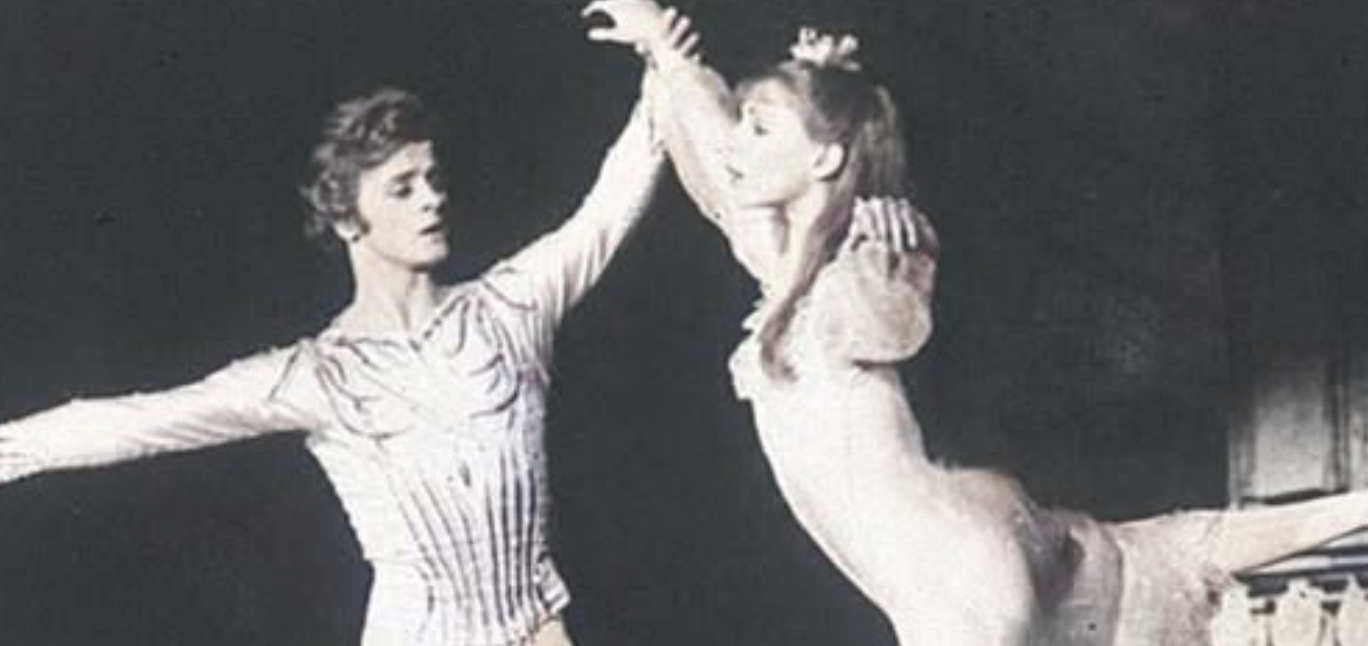
The Invitation Ballet was choreographed by Kenneth MacMillan and was first performed by the Royal Ballet Touring Section at the New Theatre in Oxford on the 10th of November 1960.
The original cast were Lynn Seymour as the girl, Christopher Gable as her cousin, Anne Heaton and Desmond Doyle as the husband and wife. They were all superb and the ballet announced Lynn Seymour as one of the most beautiful expressive dramatic dancers of those times.
In a bold move, in The Invitation Kenneth MacMillan chose to create a sexual drama of shifting emotions and desires that culminates with the rape of a young girl by an older married man.
Watch This Video About The Invitation
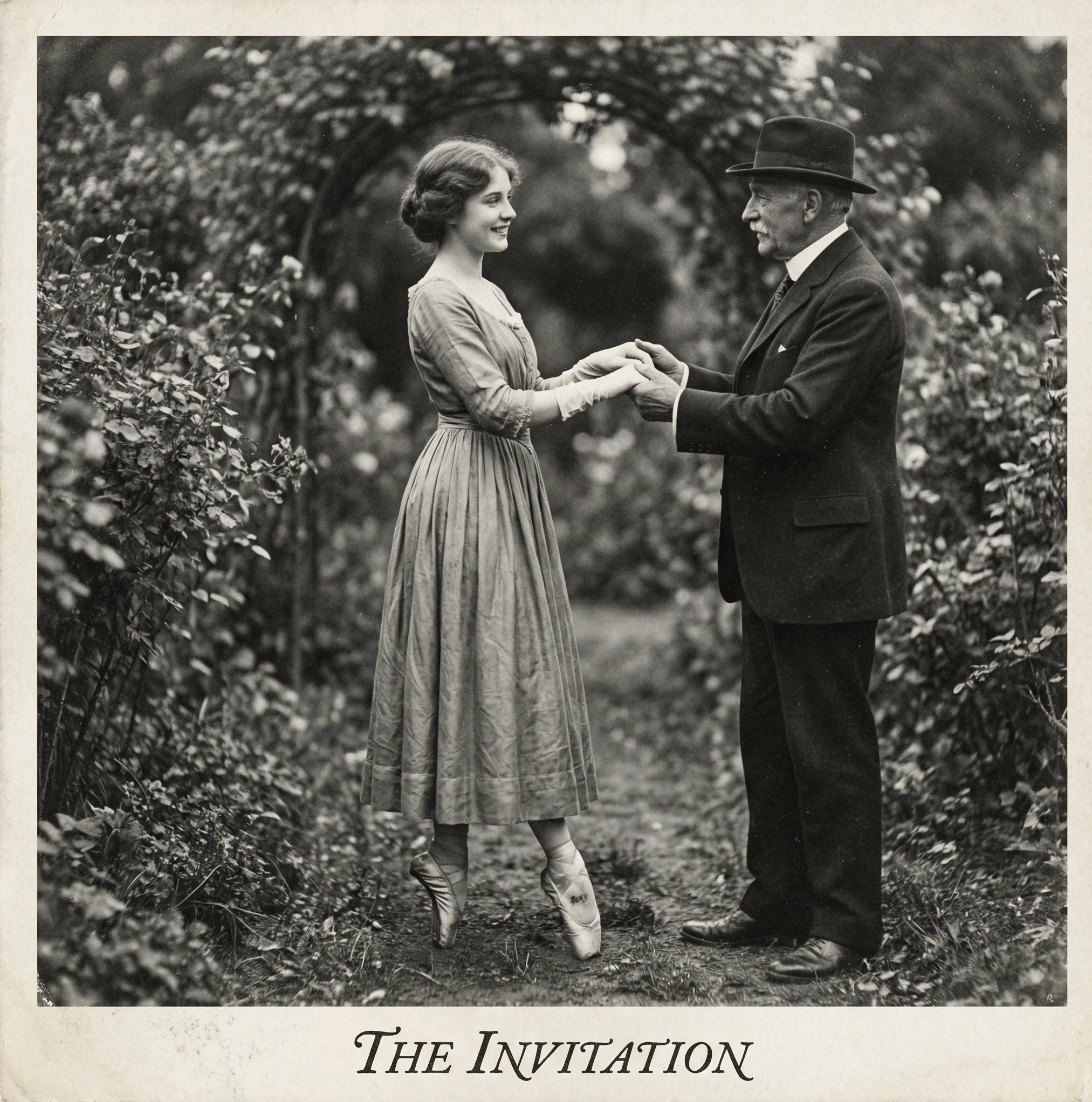
The Invitation Ballet
Synopsis:
In a wealthy household in some warm climate at the turn of the century, a house party has been arranged by a wealthy widow with three daughters.
The two eldest girls are of marriageable age, and are carefully guarded from the world by their mother.
The youngest girl plays with her boy cousin and their friends, who, with their parents, are guests at the house.
She is revolted by the sly, sexual innuendoes of the other children, and is unable to understand the gentle, budding sexuality of her cousin’s affection for her.
At the afternoon reception we see the guest arrive, among them an unhappy husband and wife. When the guests go to watch the children at their dancing lessons, the husband manifests an interest in the young girl which flatters her, though it angers the girl’s mother.
That night, the guests are watching a group of acrobats who have come to entertain the house-party. As the guests disperse through the gardens, the husband and wife quarrel yet again, and the husband angrily leaves.
The young boy, disturbed by his own feeling of urgently awakening sexuality, comes into the garden, and the wife, sensing his needs, seduces him.
The girl, innocently intrigued by the husband, steals out of the house and seeks him out in the garden. He misinterprets her presence, and unable to resist her virginal beauty, savagely rapes her.
Aghast at what he has done, he goes back to the house, where his wife, realizing what has happened, still finds the strength and understanding to support him.
The girls, shattered by her experience, returns distraught to the house, and her cousin endeavors to console her. She believes that his tender passion is exactly the same as the husband’s brutality, and with fierce energy drives him from her as the curtain falls. She walks with a frozen gaze and rigid gait away from all chance of future happiness.
About The Ballet
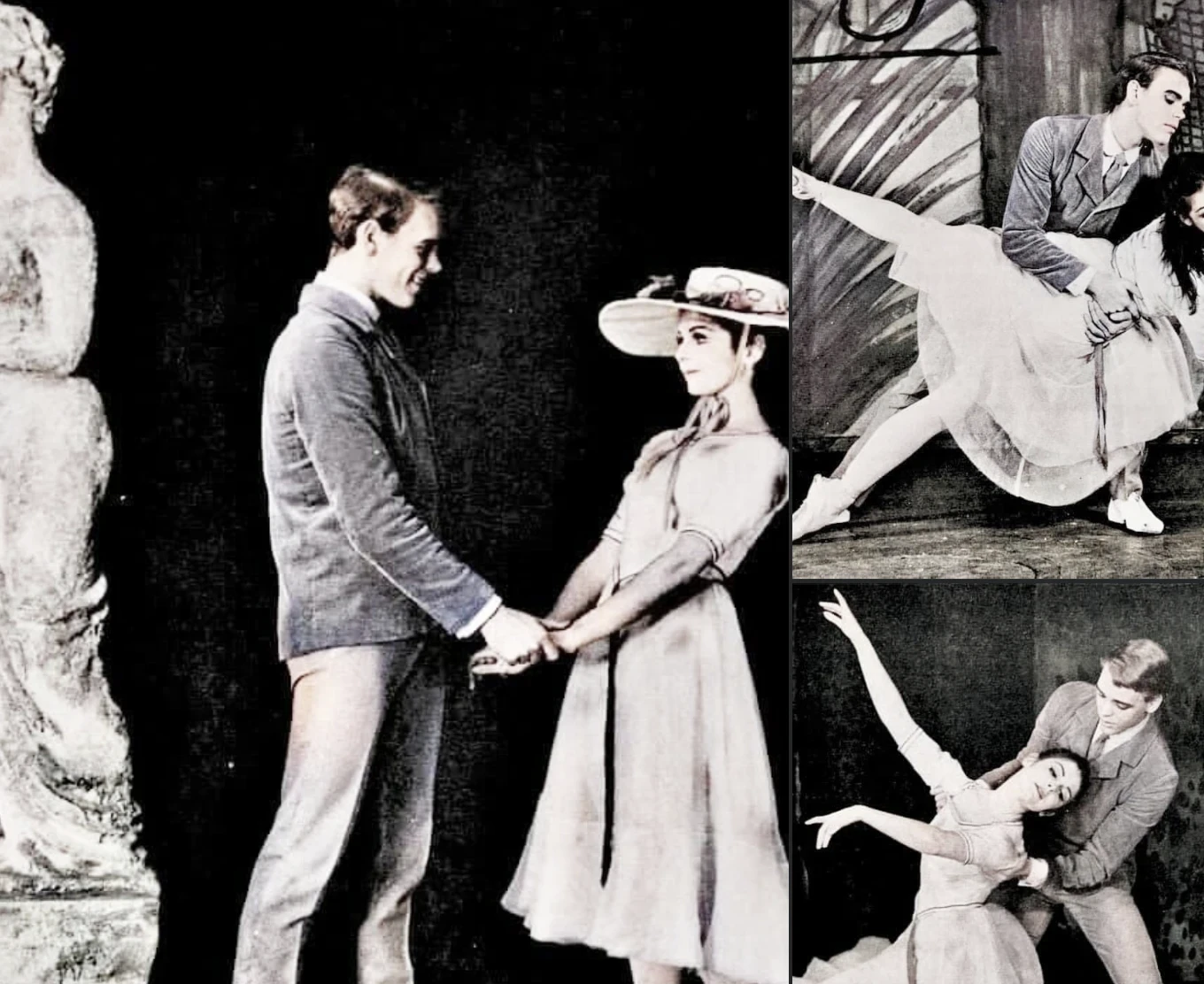
The Invitation is a ballet about sex, from the moment the curtain rises and we see the young boy gazing at the naked female statue, the theme is plain.
In setting his ballet in some unspecified warm climate at the turn of the century, MacMillan was able to use certain recognized social attitudes and conventions to underpin his dramatic structure.
The ballet was inspired indirectly by two novels – Beatriz Guido’s The house of the Angel, and Coleet’s Le Blé and Herbe. These books provide respectively, germs of the girl’s and the boy’s characters. But the extension of the incidents is entirely MacMillan’s.
He is concerned with the sexual needs of adolescence, the sexual greed of the husband, and the sexual frustration of the wife, whose seduction of the body is her only answer to her husband’s neglect.
It is the particular quality of The Invitation that the characters seem to have a life that extends far beyond the stage action. Be can sense both their past disintegration of the marriage and their future, in which the boy will be unaffected by the night’s events, while the girl will freeze into a spinsterhood as embittered as that of her governess.
The hectic sexual air of the ballet becomes more and more intense as the action progresses. The acrobats impersonate two cocks in rivalry for a hen, the flashing trajectories of the guests in the night scene show men and women want upon gratification. One of the men, rejected by a girl, makes a brief pass at a male acrobat.
But lest this seem lurid and overemphatic, it should be stated that MacMillan’s expressive choreography is remarkable sensitive and beautiful.
In the dancing lesson, the man’s increasing interest in the girl is suggested by the gradually wider arcs in which he lifts her. When he attacks her, the physical act of rape is protrayed with such subtle symbolism that it is beautiful but never offensive.
The Invitation is supremely a ballet in which glances and slight gestures play a ital role.
At the afternoon reception we can see the moment when the husband is first aware of the girl and sizes up her youthful beauty. A moment later the wife greets the young cousin and the husband’s jealousy is sharply stated as he interposes his body between them.
At the dancing lesson the husband eyes the girl, and she, aware of his gaze, darts sudden shy glances at him.
The Invitation is compact with such small, revelatory detail; it is they which give such truth and intensity to the principal characters.
It is ironic that despite being considered shocking in 1960, over 60 years later the ballet may now be seen as too distressing for audiences. The music was by Mátyás Seiber and designs by Nicholas Georgiadis.



Wow, this piece on The Invitation Ballet pulled me right into the story. It’s written in a way that made me feel the dance, not just read about it. Your explanations are vivid and inviting, and I genuinely felt more connected to the art just by reading this. Thank you for making something that could feel abstract so accessible and moving. I’m curious, is there a particular moment in this ballet that you always find yourself returning to, either as a viewer or performer?
Unfortunately I never got to see this ballet, only snippets that I have found on the internet. I would love to find a full copy to watch.
Thanks for stopping by Lori Lynn.
A very interesting article indeed. I have never fully understood the depth of ballet.What stood out to me is your point about “glances and slight gestures” carrying the drama. MacMillan’s storytelling through small details feels like a signature. Do you think that subtlety is what makes the work still powerful (and still uncomfortable) today?
It’s definitely about the small things when it comes to choreography and how to get your message across to the audience when you don’t have a voice to do it with. I think MacMillan was very skilled in this way and knew exactly how to portray a message to the audience.